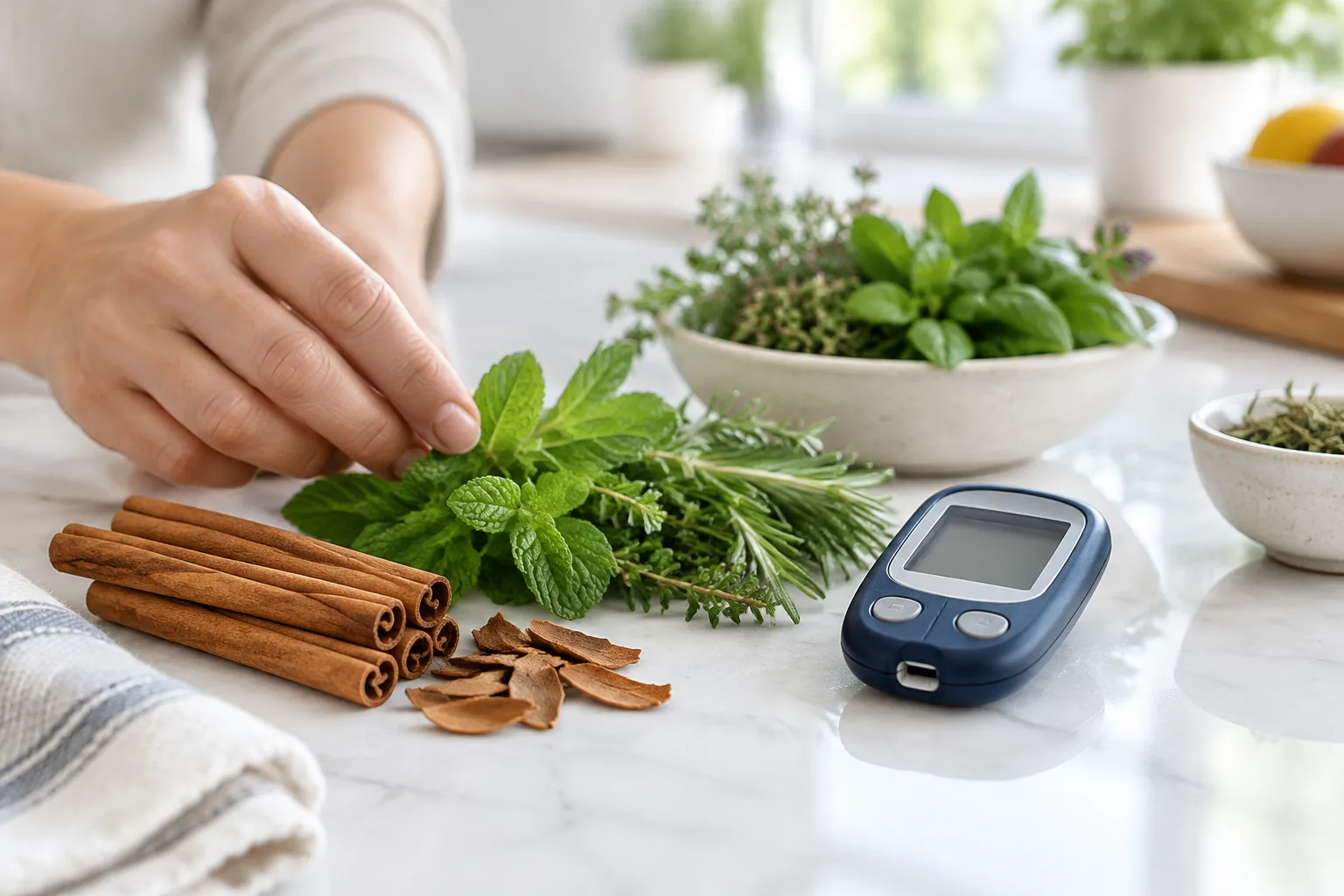
 Herbs and plants
Cinnamon bark and antidiabetic herbs — do they lower blood sugar?
- Henryk Różański — Zioła przeciwcukrzycowe jako alternatywy dla leków hipoglikemicznych syntetycznych, cz. IV
- Henryk Różański — Zioła przeciwcukrzycowe, cz. I
- Henryk Różański — Zioła przeciwcukrzycowe jako alternatywy dla leków hipoglikemicznych syntetycznych, cz. VII. Zioła przydatne w leczeniu cukrzycy typu 1
- Henryk Różański — Kalmia (dorodnia) – Calmia w praktycznej fitoterapii.
- Henryk Różański — Mieszanki ziołowe zalecane przez dra G. Madausa przy cukrzycy – Diabetes
- Cinnamon intake lowers fasting blood glucose: meta-analysis. · J Med Food 2011
- Effect of cinnamon as a Chinese herbal medicine on markers of cardiovascular risk in women with polycystic ovary syndrome: A systematic review and meta-analysis of randomized controlled trials. · Eur J Obstet Gynecol Reprod Biol 2024
- Complementary and alternative medicine for glycemic control of diabetes mellitus: A systematic review. · J Public Health Res 2022
- A Systematic Review of Herbal Medicines in the Management of Diabetes: Efficacy, Toxicological Profiles, and Clinical Safety Considerations. · Cureus 2026
- Efficacy and Safety of Cinnamomum zeylanicum (Ceylon cinnamon) for diabetes mellitus: a randomized, double blind, placebo-controlled clinical trial. · Diabetes Metab Syndr 2025
- Efficacy of cinnamon in patients with type II diabetes mellitus: A randomized controlled clinical trial. · Clin Nutr 2019
- Cinnamon as a Complementary Therapeutic Approach for Dysglycemia and Dyslipidemia Control in Type 2 Diabetes Mellitus and Its Molecular Mechanism of Action: A Review. · Nutrients 2022
- Medicinal plants in the adjunctive treatment of patients with type-1 diabetes: a systematic review of randomized clinical trials. · J Diabetes Metab Disord 2020
Henryk Różański attributes reduced insulin resistance and increased glycogen production in the liver to compounds in cinnamon.
- According to him, myrtillin and neomyrtillin from bilberry leaves lower blood sugar, and a leaf extract maintained normal blood sugar levels in the dogs studied.
- Różański also describes the blood-sugar-lowering effects of berberine, bitter melon, and herbs containing phlorizin.
- He also provides recipes for antidiabetic herbal mixtures and instructions for using them.
What the authors write
Cinnamon is listed in connection with mechanisms involving activation of the insulin receptor and increased GLUT-4 translocation.
Reduced insulin resistance and increased glycogen production in the liver have been attributed to compounds in cinnamon.
Myrtillin and neomyrtillin from bilberry leaves have been attributed with blood-sugar-lowering effects, and a leaf extract maintained normal blood sugar levels in the dogs studied.
According to Henryk Różański, berberine has blood-sugar-lowering properties.
Bitter melon has been attributed with regulating and lowering blood glucose levels in patients with diabetes.
Herbs containing phlorizin have been attributed with lowering blood glucose.
Mixtures of herbs described as antidiabetic were listed, along with instructions for preparing and drinking them.
Further antidiabetic herbal mixtures and instructions for their use were provided.
Research from PubMed · Europe PMC
We selected 8 studies with the best, positive results. This is a selection, not a full review of all research.
Total number of studies on this topic in PubMed: 111.
A meta-analysis found that cinnamon or its extract lowered fasting blood glucose in people with type 2 diabetes or prediabetes.
Aim of the study: Cinnamon, the dry bark and twig of Cinnamomum spp., is a rich botanical source of polyphenolics that has been used for centuries in Chinese medicine and has been shown to affect blood glucose and insulin signaling.
Results: The eight clinical studies were identified using a literature search (Pub Med and Biosis through May 2010) of randomized, placebo-controlled trials reporting data on cinnamon and/or cinnamon extract and FBG. Comprehensive Meta-Analysis (Biostat Inc., Englewood, NJ, USA) was performed on the identified data for both cinnamon and cinnamon extract intake using a random-effects model that determined the standardized mean difference ([i.e., Change 1(control) - Change 2(cinnamon)] divided by the pooled SD of the post scores). Cinnamon intake, either as whole cinnamon or as cinnamon extract, results in a statistically significant lowering in FBG (-0.49±0.2 mmol/L; n=8, P=.025) and intake of cinnamon extract only also lowered FBG (-0.48 mmol/L±0.17; n=5, P=.008). Thus cinnamon extract and/or cinnamon improves FBG in people with type 2 diabetes or prediabetes.
“Not stated” does not mean nobody paid — the database does not always record it.
A meta-analysis in women with PCOS found that cinnamon supplementation improved fasting blood glucose.
Aim of the study: Polycystic Ovary Syndrome (PCOS) is a hormonal disorder in women associated with increased cardiovascular risk. Cinnamon, a Chinese herbal medicine, is known for its anti-inflammatory and insulin-sensitizing properties, making it a potential therapeutic agent for PCOS-related cardiovascular complications.
Results: The meta-analysis revealed a statistically significant effect of cinnamon on reducing weight. Under the random-effects model, the pooled weighted mean difference (WMD) was -0.47 kg (95 % CI: -0.80 to -0.15, p < 0.001; I2 = 0.0 %). There was also a beneficial impact on insulin resistance, with reduced HOMA-IR scores following cinnamon supplementation (SMD=0.5015, 95 % CI: 0.2496 to 0.7533, p < 0.0001). Additionally, there was a significant improvement in FBS levels (pooled WMD: -7.72 mg/dL, 95 % CI: -12.33 to -3.12, p < 0.001; I2 = 91.3 %). The meta-analysis indicated a tendency towards reduced total cholesterol (WMD: -11.12 mg/dL, 95 % CI: -19.06 to -3.18, p = 0.01; I2 = 0.0 %) and LDL levels (WMD: -11.11 mg/dL, 95 % CI: -18.22 to -4.00, p < 0.01; I2 = 0.0 %) following cinnamon intervention. Substantial heterogeneity was observed among the studies, indicating the need for further research with larger sample sizes and standardized methodologies.
“Not stated” does not mean nobody paid — the database does not always record it.
A systematic review indicated that cinnamon and several other natural products may support glycemic control in diabetes.
Aim of the study: The use of complementary and alternative medicine (CAM) is increasingly popular for the management of diabetes mellitus (DM). The aim of this study was to conduct systematic review of any types of complementary and alternative medicine for glycemic control of diabetes mellitus.
Results: securigera), Nigella sativa, Mulberry juice, chicory, chamomile tea, and bell pepper juice combined with an integrated approach of yoga therapy. Mind body practices such as auditory guided imagery (AGI), qigong and tai chi exercises, and relaxation. Whole system approach, such as acupressure. Health care providers consider CAM for DM management.
“Not stated” does not mean nobody paid — the database does not always record it.
A systematic review found that the herbs studied often lowered fasting and post-meal glucose, and sometimes HbA1c as well.
Aim of the study: Diabetes mellitus and prediabetes represent major global health challenges associated with metabolic and cardiovascular complications. This review was conducted to evaluate herbal medicines as complementary strategies for glycaemic control and metabolic risk reduction.
Results: Improvements in lipid profiles and vascular parameters were also reported. Safety assessments revealed favorable tolerability, with no serious adverse events and stable hepatic and renal markers at studied doses. Findings from the included studies indicate that selected herbal medicines demonstrated adjunctive benefits in glycaemic control and metabolic parameters in diabetes and prediabetes. Further well-designed trials are needed to confirm long-term efficacy, safety, and clinical applicability.
“Not stated” does not mean nobody paid — the database does not always record it.
In a study of people with type 2 diabetes, Ceylon cinnamon extract lowered fasting blood glucose and HbA1c compared with baseline.
Aim of the study: The search for novel antihyperglycemic agents from herbal medicines has highlighted cinnamon, which contains biologically active compounds with insulin-mimetic effects in-vitro. We assessed the efficacy and safety of Cinnamomum zeylanicum (CZ) extract in individuals with Type 2 Diabetes.
Results: The mean age of participants was 58.6 ± 8.2 years, with 42.9 % (n = 90) being male; 186 completed the four-month follow-up. Both FPG and HbA1c significantly declined in the CZ extract groups compared to baseline, accompanied by reduced insulin resistance and improved β-cell function (p < 0.05). At four months, total and LDL cholesterol were significantly lower in the 500 mg CZ extract group (p < 0.05). Regression analyses identified CZ extract treatment as a significant predictor of changes in both FPG and HbA1c. This randomized controlled trial developed and tested a CZ-based intervention for Type 2 Diabetes, demonstrating its promising efficacy and safety. Further studies are warranted to explore its potential as a pharmaceutical agent for diabetes management.
“Not stated” does not mean nobody paid — the database does not always record it.
In a clinical study, cinnamon supplementation improved several glycemic indicators in people with type 2 diabetes.
Aim of the study: Multiple studies have evaluated the hypoglycemic effect of cinnamon in patients with diabetes mellitus (DM) type II, with conflicting results. Differences in Baseline Body Mass Index (BMI) of patients may be able to explain the observed differences in the results. This study was designed to evaluate the effect of cinnamon supplementation on anthropometric, glycemic and lipid outcomes of patients with DM type II based on their baseline BMI.
Results: Cinnamon supplementation led to improvement of all anthropometric (BMI, body fat, and visceral fat), glycemic (FPG, 2hpp, HbA1C, Fasting Insulin, and Insulin Resistance), and lipids (Cholesterol Total, LDL-c and HDL-c) outcomes (except for triglycerides level). All observed changes (except for Cholesterol Total and LDL-c) were significantly more prominent in patients with higher baseline BMI (BMI ≥ 27). Based on the study findings, cinnamon may improve anthropometric parameters, glycemic indices and lipid profile of patients with type II diabetes. These benefits are significantly more prominent in patients with higher baseline BMI (BMI ≥ 27). The trial protocol was registered in Iranian Registry of Clinical Trials database (registration ID: IRCT2017031133015N1).
“Not stated” does not mean nobody paid — the database does not always record it.
A review of the available studies indicated that cinnamon improved glycemic and lipid indicators.
Aim of the study: The scientific evidence that cinnamon may exert beneficial effects on type 2 diabetes mellitus due to the biological activity of its bioactive compounds has been increasing in recent years. This review provides an overview of the effects of cinnamon on clinical parameters of diabetes and summarizes the molecular mechanisms of action of cinnamon on glucose and lipid metabolism.
Results: Based on in vitro and in vivo studies, cinnamon seems to elicit the regulation of glucose metabolism in tissues by insulin-mimetic effect and enzyme activity improvement. Furthermore, cinnamon seems to decrease cholesterol and fatty acid absorption in the gut. The current literature search showed a considerable number of studies on diabetic subjects. Some limitations in comparing published data should be highlighted, including variability in doses, extracts and species of cinnamon, administration forms, and antidiabetic therapy.
“Not stated” does not mean nobody paid — the database does not always record it.
A review of a small number of studies indicated that cinnamon tablets may lower some glucose indicators in people with type 1 diabetes.
Results: Four RCTs were finally included in the systematic review with an overall moderate quality of conduct and low quality of reporting. The sample sizes were very small. The results of these RCTs show that cinnamon pills and Berberine/Silymarine compound capsules may decrease blood glucose indices from baseline, while fenugreek seeds and fig leaf decoction do not show any statistically significant effect. The evidence is scarce and no recommendations can be made based on current evidence. Further trials with more rigorous methodology and stronger quality of reporting are needed to make conclusions.
“Not stated” does not mean nobody paid — the database does not always record it.
Pisaczek does not judge who is right. It shows what was written and where to read it. Every sentence above has its source.